
The magic of Venice’s carnival: history, masks and celebrations
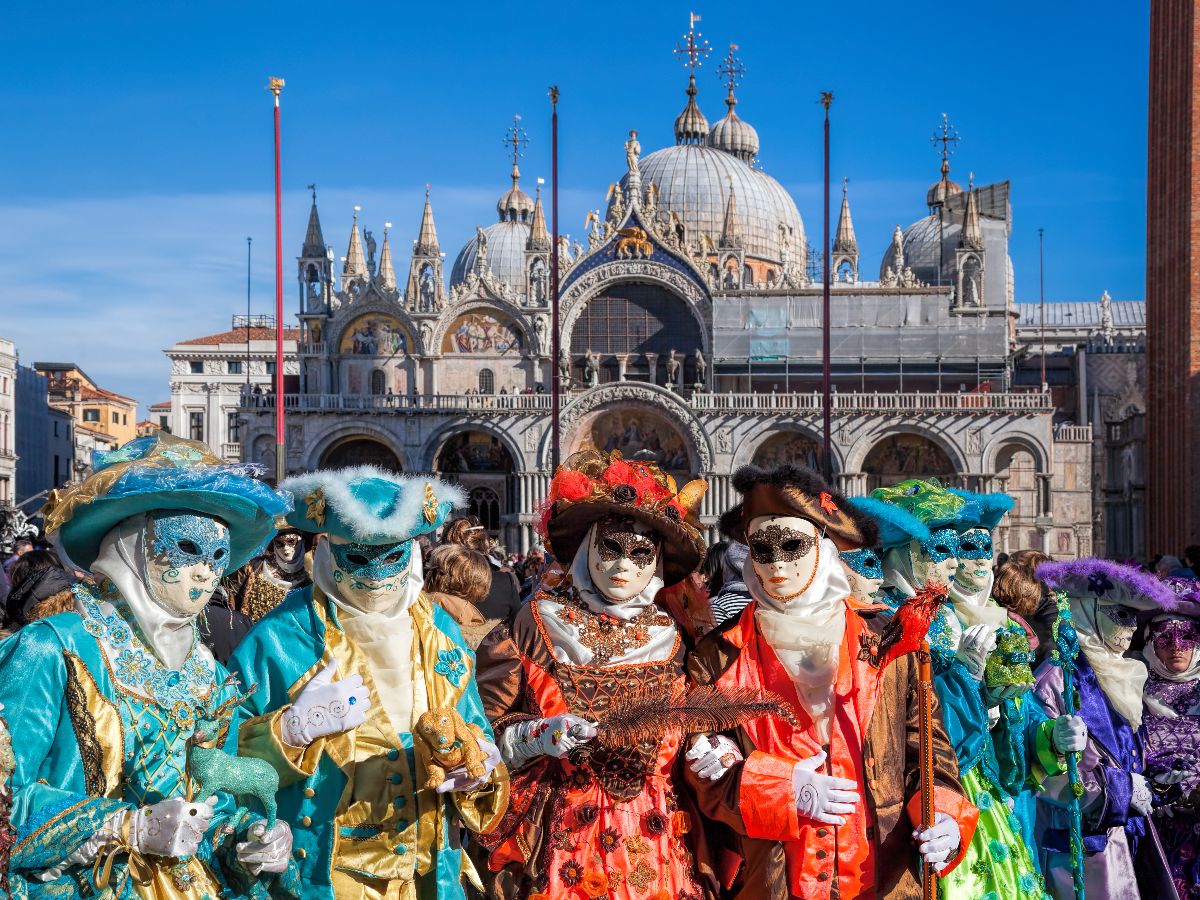
The Carnival of Venice was first celebrated in 1162 when, because of the victory of the Republic of Venice over the Patriarch Ulrico di Treven, the people filled St. Mark’s Square with dances of celebration. It wasn’t until the Renaissance that the tradition actually became official though, and it only started gaining a lot of popularity in the XVIII century. Unfortunately though, at the peak of its fame at the time, the Carnival of Venice was banned completely, along with its masks, by the Roman Emperor in 1797, leading to a great period of absence for this iconic celebration. It wasn’t until the XIX century that the Carnival began reappearing with small parties, only to officially return in 1979 as the Italian government considered it to be one of the most important aspects of Venice’s culture.
Nowadays, as previously mentioned, the Venetian Carnival is one of the most important Carnivals in the whole world and over 3 million visitors come to Venice every year to celebrate it and participate in “La Maschera più Bella “, a contest that started in 2007 that elects the most beautiful mask.
THE TYPES OF MASKS
Masks were first made for Carnival in the XIII century, as a way to bring together the lower, middle and upper class with no judgment, as they would cover your face, therefore your identity.
Here’s a list of some of the most iconic Venetian masks to this day:
* MORETTA : Invented in France, the Moretta is considered to be a woman’s mask because of its feminine traits;
* COLUMBINA : This half-mask was invented by an actress that participated in Commedia dell’arte because she refused to fully cover her face up as she thought she was too beautiful;
* BAUTA : Probably the most important mask according to tradition, the Bauta completely covers your face and it was particularly loved back in the day as it would hide your identity. It’s nowadays commonly gifted as a souvenir;
* PLAGUE DOCTOR : Initially made by French doctor Charles de Lorme to help protect doctors from the Plague, this mask represents the knowledge of mortality;
CONCLUSION :
**Visiting the city of Venice during Carnival season is definitely one of the best chances to fully immerse yourself in the history, tradition and art of this city. The 2024 edition of the Venetian Carnival starts February 3rd and ends February 13th.



Venice Jewish Ghetto Private Tour: Exploring Cannaregio’s Hidden History
- Venice
- Private Tour
- 2 hours
Book With Extra Flexibility
Choose new departure dates if your plans change.
Reach out to us anytime via online chat, phone or email.
Get credit for future trips if you need more time to decide.
Change to a different tour run by the same tour operator.